
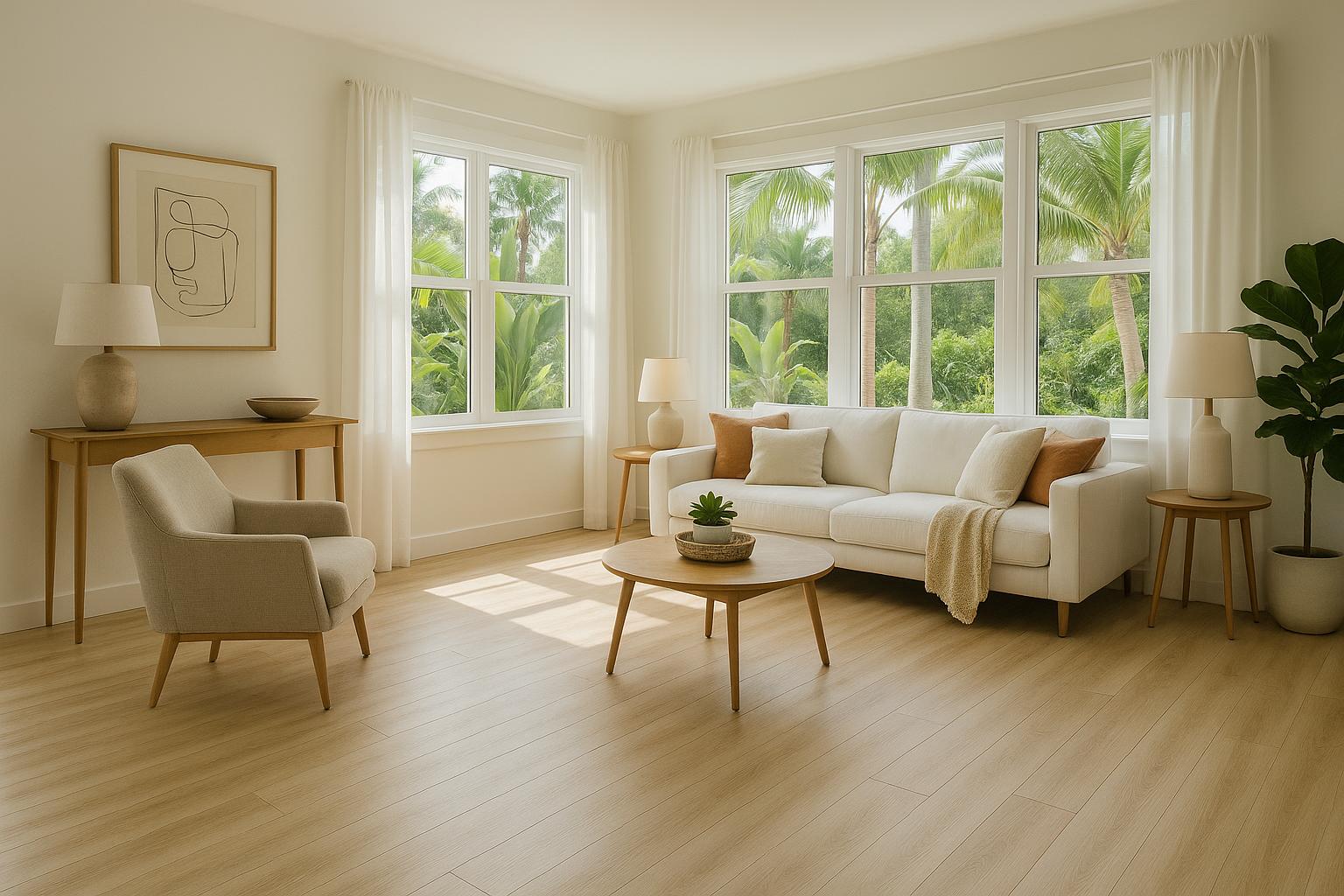
Your Floors Have to Work Harder in South Florida
Flooring in South Florida isn't just about aesthetics. Between the humidity, the heat, the sand tracked in from the beach, and the occasional tropical storm that sends moisture creeping under your doors, your floors take a beating that homeowners in other parts of the country simply don't deal with.
If you're planning a remodel — or even just replacing worn-out flooring — choosing the right material matters more here than almost anywhere else. The wrong choice can warp within a year. The right one can look stunning for decades.
Here's what Boynton Beach homeowners need to know before committing to new flooring.
Why Humidity Changes Everything
South Florida's average humidity hovers between 60% and 80% year-round. That kind of persistent moisture in the air affects flooring materials in ways that aren't always obvious at the showroom.
- Solid hardwood expands and contracts with humidity changes, which can cause cupping, buckling, and gaps between planks.
- Cheap laminate can swell at the seams when exposed to moisture, especially in bathrooms and kitchens.
- Carpet traps moisture and becomes a breeding ground for mold and mildew — a real concern in our climate.
This doesn't mean you're limited to one or two options. It means you need to choose strategically and install properly. Both matter equally.
The Best Flooring Options for Boynton Beach Homes
Porcelain and Ceramic Tile
Tile is the gold standard for South Florida flooring, and for good reason. Porcelain and ceramic are completely waterproof, incredibly durable, and available in an almost endless range of styles — including options that convincingly mimic wood, marble, and natural stone.
Porcelain tile is denser and more moisture-resistant than ceramic, making it the better choice for bathrooms, outdoor areas, and anywhere that sees heavy water exposure. Ceramic works beautifully in bedrooms, living rooms, and other dry spaces where you want the look of tile without the premium price.
Custom tile work also gives you design flexibility that other materials can't match. Herringbone patterns, large-format tiles, mosaic accents — the options are virtually limitless.
Luxury Vinyl Plank (LVP)
Luxury vinyl plank has exploded in popularity over the past several years, and it's easy to see why. Modern LVP is waterproof, scratch-resistant, comfortable underfoot, and available in wood-look styles that are surprisingly realistic.
For families with kids and pets, LVP is a practical choice that doesn't sacrifice appearance. It installs quickly, holds up well in high-traffic areas, and won't react to humidity the way natural wood does.
One thing to watch for: not all LVP is created equal. Cheaper products can look and feel plasticky, and the locking mechanisms may fail over time. Investing in a quality brand and professional installation makes a significant difference in how the floor looks and performs five years down the road.
Engineered Hardwood
If you love the warmth and character of real wood, engineered hardwood is the way to go in our climate. Unlike solid hardwood, engineered planks are built with a layered construction that resists expansion and contraction caused by humidity.
It's not completely immune to moisture — you still wouldn't install it in a bathroom — but for living rooms, dining rooms, and bedrooms, engineered hardwood gives you the authentic look and feel of wood without the long-term headaches.
Natural Stone
Travertine, marble, and slate all show up in Boynton Beach homes, and they can look absolutely stunning. Natural stone stays cool underfoot, which is a welcome feature during our long summers.
The tradeoff is maintenance. Natural stone is porous and requires periodic sealing to prevent staining and moisture damage. It's also more expensive to purchase and install. But for homeowners who want a high-end, timeless look, it's hard to beat.
Flooring to Think Twice About
We're not saying these materials are always wrong — but they come with real risks in our environment:
- Solid hardwood: Beautiful but prone to warping and cupping in high humidity. If your heart is set on it, talk to your contractor about climate control requirements and realistic expectations.
- Standard laminate: Budget-friendly but vulnerable to moisture damage at the seams. If you go this route, keep it far from kitchens, bathrooms, and entryways.
- Wall-to-wall carpet: Comfortable but a magnet for allergens, mold, and mildew in humid climates. If you want softness underfoot, consider area rugs over hard flooring instead.
Don't Forget What's Underneath
The subfloor and underlayment matter just as much as the flooring material itself. In many older Boynton Beach homes — especially those built in the 1970s and 1980s — the subfloor may have moisture issues, uneven spots, or outdated materials that need to be addressed before new flooring goes down.
Skipping this step is one of the most common mistakes in DIY flooring projects. A professional contractor will assess the subfloor condition, correct any problems, and ensure the new material is installed on a solid, level, moisture-protected foundation.
Matching Your Flooring to Your Lifestyle
Beyond climate considerations, your flooring choice should reflect how you actually live in your home. A few questions worth asking:
- Do you have pets? Scratch-resistant options like LVP or porcelain tile will save you frustration.
- Do you entertain often? Durable, easy-to-clean materials keep your home looking its best without constant upkeep.
- Are you remodeling for resale? Neutral tones and universally appealing materials like wood-look tile or engineered hardwood tend to attract the widest pool of buyers.
- Do you have young children? Comfort, safety, and easy cleanup should be priorities — LVP and tile with area rugs are a popular combination.
How Flooring Fits Into a Larger Remodel
Flooring is rarely a standalone project. If you're already updating your kitchen or bathroom, it makes sense to address the floors at the same time. Coordinating flooring with cabinetry, countertops, and paint colors creates a cohesive look that makes the entire space feel intentional and finished.
At Nova General Contractors, we help Boynton Beach homeowners think through these decisions as part of the bigger picture — not as an afterthought. Whether you're renovating one room or your entire home, getting the flooring right from the start saves time, money, and the headache of redoing it later.
Ready to Talk Flooring?
If you're considering new flooring as part of a remodel — or as a standalone upgrade — we'd love to help you find the right material for your home, your lifestyle, and our South Florida climate. Reach out to Nova General Contractors for a free consultation, and let's build something that lasts.